
RAP-A for Adolescents
RAP-A (Resourceful Adolescent Program – Adolescent Version) is an evidence-based program that helps adolescents build resilience, develop healthy relationships and build practical skills for navigating the challenges of adolescence.
Used internationally in schools and community settings, RAP-A provides a practical, strengths-based approach to supporting positive mental health and wellbeing that can be readily integrated into school settings.
At a glance
-

Audience
Adolescents aged 12-16
-

Format
Small-group program (11 sessions, 8–15 participants)
-

Duration
45-55 minutes each
-

Focus
Resilience, wellbeing and coping skills
-

Facilitators
Teachers, counsellors, youth workers and mental health practioners
-

Evidence
25+ years of published academic research
RAP-A has been extensively researched and evaluated over more than 25 years, including numerous controlled trials. This strong evidence base demonstrates the program’s effectiveness in enhancing coping resources, strengthening young people’s confidence in handling challenges, reducing the risk of adolescent depression, and supporting positive mental health and wellbeing.
The program is also delivered by health and community organisations seeking an early intervention or prevention approach to strengthening resilience in young people.
The program consists of 11 structured sessions of approximately 50 minutes each and is typically delivered to small groups of 8 to 16 students within the regular school curriculum (Years 6–10). It has also been effectively delivered in larger class settings. RAP-A integrates cognitive-behavioural and interpersonal approaches to strengthen coping skills, build resilience, and support positive development.
Implementing the program
Becoming a RAP-A facilitator
RAP-A is delivered by trained facilitators within schools, community organisations and wellbeing services. To ensure the program is delivered consistently and effectively, facilitators complete RAP-A training before delivering the program.
Training provides participants with a comprehensive understanding of the RAP-A framework, program resources and facilitation approach, equipping them with the skills and confidence to deliver the program in their own setting.
RAP-A training is suitable for a range of education and mental health professionals, including:
Psychologists/ Social workers / Occupational therapists / Psychiatrists / Mental Health Nurses
School counsellors/ Guidance officers/Chaplains
Teachers
Community and youth workers
Training is delivered regularly online via Zoom and tailored training can also be arranged for organisations on request. See the Training section for upcoming courses and further details.
RAP-A training has been delivered across many regions, and the program is now used in 29 countries worldwide. Where possible, training sessions are scheduled to suit different time zones. All training is currently delivered in English.
Group participants and size
RAP-A is designed for adolescents aged 11–16.
Small groups (8 to 16 participants) are ideal when working with students who may benefit from additional support (i.e. at risk students), as this allows stronger connections to develop between participants and the facilitator. The program can also be effectively delivered to larger class groups when implemented across a full school cohort (i.e. a universal implementation).
Program resources
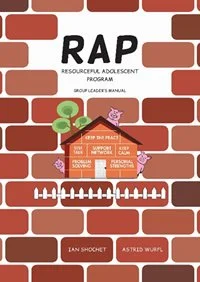
RAP-A Group Leader’s Manual
This comprehensive manual provides detailed guidance for delivering each of the eleven sessions. It outlines the content, structure, and activities used to introduce and reinforce key concepts throughout the program. Each session includes a summary of required materials and concludes with relevant handouts, which are also included in the Participant Workbook.
RAP-A Participant’s Workbook
The RAP-A Workbook contains all materials needed for both individual and group activities. Each participant requires their own workbook to complete exercises during the program and to keep as an ongoing resource.
Supplementary material
Additional resources are available with the purchase of a RAP-A Group Leader’s Manual and will be available for download at the conclusion of training.
RAP-A Indigenous Supplement
The RAP-A Indigenous Supplement provides guidance for adapting and delivering the program with Indigenous adolescents. It outlines a range of culturally informed adaptations to support relevance and engagement for Indigenous Australian young people.
Program content
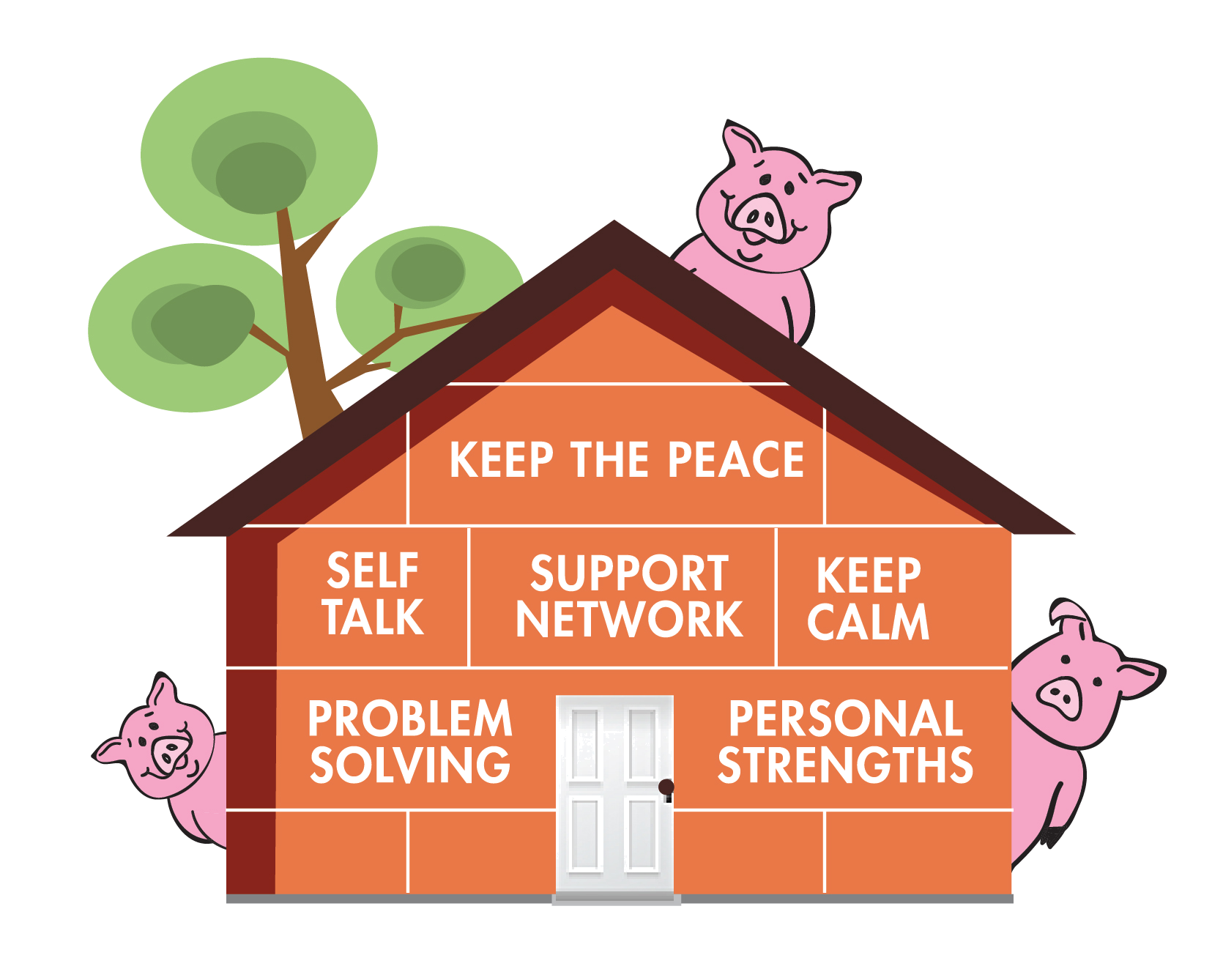
The RAP-A program uses the familiar metaphor from the children’s story of the Three Little Pigs, where only the house made of bricks withstands the Big Bad Wolf. Across the program, students gradually build their own personal “RAP-A house” by adding different resource “bricks” (e.g. Personal Strength Bricks, Keeping Calm Bricks, Problem Solving Bricks) as each session unfolds.
The cognitive-behavioural component focuses on practical skills such as staying calm, cognitive restructuring, and problem solving. The interpersonal component highlights the importance of relationships, including managing conflict and role challenges, and developing an understanding of others’ perspectives. A consistent theme throughout the program is maintaining and strengthening self-esteem when facing everyday stressors and to then draw on these resources in stressful times.
RAP-A is typically delivered across eleven structured group sessions, each lasting around 45 to 50 minutes during school class time, with one facilitator per group. Sessions can also be adapted where longer time blocks are available (for example, six sessions of approximately 120 minutes). RAP has also been successfully run in a camp.
The sessions are organised around seven key areas:
·recognising and building on existing strengths and resources
developing self-management and self-regulation skills under stress
cognitive restructuring
creating a personal problem-solving framework
building and using support networks
understanding others’ perspectives
maintaining positive relationships and resolving conflict (keep the peace and make the peace).
The content and structure of each session are outlined in the RAP-A Group Leader’s Manual.
Participant workbooks are provided to each student.
Sessions, key messages and aims in the Resourceful Adolescent Program (RAP-A)
-
Key Message: We’re interested in you. Let’s work together as a team.
Goals: Establish rapport and build trust between participants and the facilitator. -
Key Message: I’m OK. I’m building on my strengths.
Goals: Introduce the program and explore self-esteem and personal strengths. -
Key Message: Our body clues and self-talk influence how we feel and behave.
Goals: Explore links between behaviour, body clues, thoughts, and emotions; introduce ‘risky’ and ‘resourceful’ responses. -
Key Message: Be a detective. Notice your body clues and stay calm.
Goals: Identify body clues linked to emotions and develop strategies to manage stress and anger. -
Key Message: I am what I think.
Goals: Explore how thoughts influence feelings and behaviour; introduce cognitive restructuring. -
Key Message: You can change your thinking.
Goals: Build on Session 5 by challenging unhelpful thoughts and strengthening positive self-talk. -
Key Message: There are solutions to my problems.
Goals: Introduce a problem-solving approach and apply it to real-life social situations. -
Key Message: Help is always available.
Goals: Identify and strengthen social support networks for different situations. -
Key Message: There are two sides to every story. Stop and think.
Goals: Develop skills to understand others’ thoughts, feelings, and reactions in interpersonal situations. -
Key Message: Keep the peace and make the peace.
Goals: Explore strategies to prevent, manage, and move on from conflict -
Key Message: Being resourceful works. Let’s celebrate.
Goals: Review key concepts, consolidate learning, and celebrate progress.